Courtroom Reports: SDP Leadership Dispute
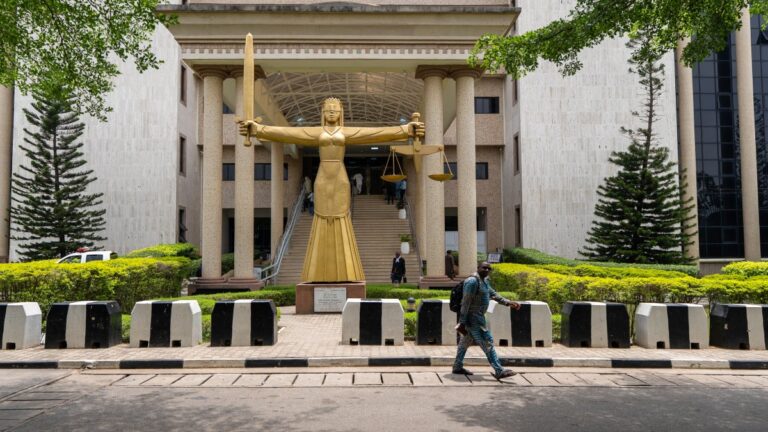
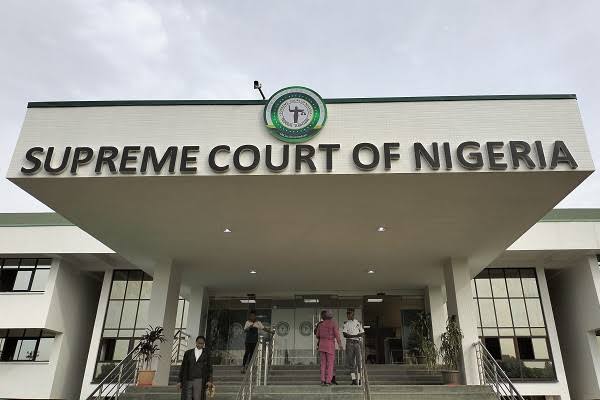
The Court of Appeal in Abuja has overturned a Federal High Court decision that had recognised Shehu Musa Gabam as national chairman of the Social Democratic Party (SDP), affirming instead Professor Abubakar Sadiq Gombe as the party’s national chairman.
The ruling, delivered by a three-member appellate panel comprising Justice Muslim Sule Hassan, Justice Lateef Adebayo Ganiyu and Justice Fadawu Umaru, marks a significant development in a dispute that has tested the SDP’s internal cohesion at a time when opposition parties are positioning themselves for Nigeria’s 2027 general election.
The decision also carries wider constitutional implications. At its core is a recurring question in Nigerian electoral jurisprudence: to what extent may courts intervene in the internal affairs of political parties, particularly leadership contests, congresses, conventions and disciplinary disputes?
For the Gombe-led faction, the judgment is both a legal vindication and a political reset. It gives the party an opportunity to focus on electoral organisation, candidate selection and its opposition strategy against the administration of President Bola Ahmed Tinubu. But it also exposes the institutional fragility that has often weakened smaller political parties in Nigeria, where leadership disputes can consume resources, divide state chapters and confuse voters.
Context and Background
The SDP occupies a distinctive place in Nigerian political history. The name recalls the party that, alongside the defunct National Republican Convention, dominated the transition programme of the early 1990s. Its modern iteration has sought to present itself as a centrist, reform-minded alternative to the country’s larger political formations, particularly the ruling All Progressives Congress (APC) and the main opposition Peoples Democratic Party (PDP).
In recent years, the party has attracted renewed attention because of the political profile of Prince Adewole Adebayo, its presidential candidate in the 2023 election and a prominent lawyer. Adebayo has been among the voices arguing that Nigeria requires a more programmatic opposition—one capable of addressing unemployment, inflation, insecurity, declining purchasing power and public distrust in political institutions.
Yet the SDP’s ability to translate that ambition into electoral strength has been complicated by contestation over its national leadership. The disagreement between the camps associated with Gabam and Gombe moved from party structures into the courts, where competing claims were made about who possessed lawful authority to lead the party and represent it before the Independent National Electoral Commission (INEC).
The Federal High Court had previously recognised Gabam. That position was challenged at the Court of Appeal, which has now set aside the earlier judgment. The appellate court’s ruling places Gombe at the helm of the party for legal and administrative purposes, subject to any further lawful challenge before the Supreme Court.
While leadership litigation is not unusual in Nigeria, it can have immediate electoral consequences. Political parties require recognised officers to submit candidate lists, conduct congresses, nominate agents, authorise litigation and engage with INEC. A dispute at the national level can therefore affect even local contests, including state and constituency elections.
The Stakes Beyond Party Offices
The controversy is not merely about titles. Control of a party’s national secretariat can determine access to membership registers, party finances, nomination processes and official correspondence with electoral authorities. It can also decide which faction has authority to issue directives to state chapters or endorse candidates for public office.
For voters, such disputes can be deeply frustrating. Nigeria’s electorate frequently sees political parties campaign on promises of institutional reform while remaining consumed by internal battles over leadership and procedure. The SDP’s case therefore raises a broader concern: whether opposition parties can build durable democratic organisations before asking citizens to entrust them with governing the country.
The Appeal Court’s Decision
The Court of Appeal’s decision is understood to rest substantially on the principle that courts should exercise restraint in matters regarded as the internal affairs of political parties. The panel reportedly concluded that the lower court ought not to have intervened in a way that effectively determined the party’s leadership structure where the dispute arose from matters governed primarily by the party’s own constitution and internal processes.
The ruling affirmed Professor Abubakar Sadiq Gombe as national chairman and overturned the Federal High Court judgment favouring Shehu Gabam. In practical terms, the decision requires public institutions and party stakeholders to treat the Gombe-led structure as the recognised national leadership of the SDP, unless and until a superior court rules otherwise.
“The judiciary should not interfere in the internal affairs of political parties,” the appellate reasoning was reported to have emphasised, reflecting a line of authority that treats party leadership and domestic administration as matters ordinarily reserved for party constitutions and internal dispute-resolution mechanisms.
The phrase “ordinarily reserved” is important. Nigerian courts do not lack all jurisdiction over political parties. They may intervene where a party’s conduct violates the Constitution, breaches statutory electoral requirements, denies a member rights guaranteed by law, or raises a justiciable issue under the Electoral Act. The legal controversy often turns not on whether a dispute occurred within a party, but whether it is exclusively internal or has crossed into an area regulated by public law.
Prince Adewole Adebayo, who served as lead counsel in the matter, presented the appellate outcome as a victory for party autonomy and due process. His dual role as a senior party figure and legal advocate underlines the political significance of the case: the litigation was not peripheral to the SDP’s future but central to its ability to organise as a coherent national platform.
Legal and Policy Analysis
The Court of Appeal’s ruling sits within a long and sometimes contested tradition of Nigerian election law. Courts have repeatedly stated that political parties are voluntary associations governed by their constitutions, rules and procedures. Under this approach, decisions about ward congresses, delegates, officers and disciplinary measures are often considered “domestic” questions.
A key constitutional reference point is Section 223 of the 1999 Constitution, which requires political parties to maintain democratically elected leadership and to provide for periodic elections on a democratic basis. The section means that party autonomy is not absolute. Parties may manage their own affairs, but they must do so within constitutional and statutory limits.
The appellate panel reportedly relied on a Supreme Court precedent delivered on May 22, 2026, reinforcing the principle of judicial non-interference in internal party matters. The significance of that authority lies in its timing and clarity: it appears to have provided the Court of Appeal with a recent and binding statement from Nigeria’s highest court on the limits of judicial involvement in intra-party disputes.
Under the established doctrine, courts are generally reluctant to substitute their judgment for that of a political party in matters of internal administration, except where the dispute presents a clear constitutional, statutory or enforceable legal violation.
That doctrine has practical policy value. If every disagreement over party offices were converted into prolonged litigation, courts could become de facto managers of political organisations. That would weaken party members’ incentives to use internal appeals, conventions, reconciliation committees and constitutionally prescribed procedures.
At the same time, critics of strict judicial restraint argue that the doctrine can protect powerful party insiders. If internal dispute-resolution mechanisms are ineffective or controlled by one faction, an aggrieved member may have little practical remedy without judicial supervision. The challenge for Nigerian courts is therefore to distinguish between ordinary political disagreements and serious legal breaches that warrant intervention.
INEC’s Role and the Osun Question
The judgment has also renewed attention on INEC’s administrative responsibilities. The electoral commission is expected to deal with the leadership structure recognised in law when receiving nominations, correspondence and documentation from the party.
In relation to the Osun electoral process, the Gombe-led SDP has called for INEC to update its relevant records and ballot-related documentation to reflect the party’s recognised authority, including matters concerning Dr. Francis Ajala. The exact administrative step required will depend on the stage of the electoral timetable and the applicable provisions of the Electoral Act, INEC guidelines and any pending litigation.
INEC must proceed carefully. Electoral management bodies are often drawn into party conflicts not because they create those disputes, but because rival factions demand recognition. The commission’s obligation is to act on valid judicial orders and legally cognisable party communications, while avoiding steps that could appear to prejudge unresolved proceedings.
For election administrators, the lesson is clear: party leadership disputes should be resolved well before nomination deadlines and ballot production. Delayed court decisions can create uncertainty for candidates, voters and officials, particularly in state-level elections where timelines are compressed.
Impact and Future Outlook
For the SDP, the immediate effect of the ruling is organisational. A confirmed national leadership can restore a chain of command, allow state chapters to receive clear directives and reduce uncertainty around meetings, membership mobilisation and candidate recruitment. It may also help the party attract politicians who are reluctant to defect to a platform perceived as legally unstable.
The more difficult task is political reconstruction. The party must demonstrate that the courtroom victory will translate into a credible public programme. Nigeria’s electorate is confronting high living costs, currency pressures, youth unemployment, insecurity in several regions and public anxiety over the effects of economic reforms. Opposition parties seeking relevance in 2027 will need more than criticism of the Tinubu administration; they will need detailed and plausible alternatives.
The Gombe-led SDP is likely to frame its next phase around unity, institutional discipline and electoral preparedness. Adebayo and other party figures have argued for a political movement capable of addressing economic inequality, strengthening productive sectors and improving government accountability. Whether those ideas gain traction will depend on the party’s ability to build grassroots structures beyond elite legal and media circles.
The ruling may also affect calculations among opposition politicians. Smaller parties can become attractive vehicles when larger parties are divided or when candidates seek alternatives to established power blocs. But they can only play that role if their legal identity, leadership structure and nomination procedures are settled.
For Nigeria’s democracy, the case offers a reminder that political parties are indispensable public institutions even when they are technically private associations. Their internal decisions affect ballot access, representation and ultimately the choices available to citizens. The principle of non-interference protects party autonomy, but autonomy must be accompanied by transparency, internal democracy and respect for party members’ rights.
The Court of Appeal’s judgment gives the SDP a legal direction. Its political consequences, however, will be decided outside the courtroom—in ward meetings, state congresses, candidate-selection processes and the everyday work of persuading Nigerians that the party can offer a serious alternative in 2027.
About the Author