4. LAW: Lawyers Call for Increase in Judicial Appointments
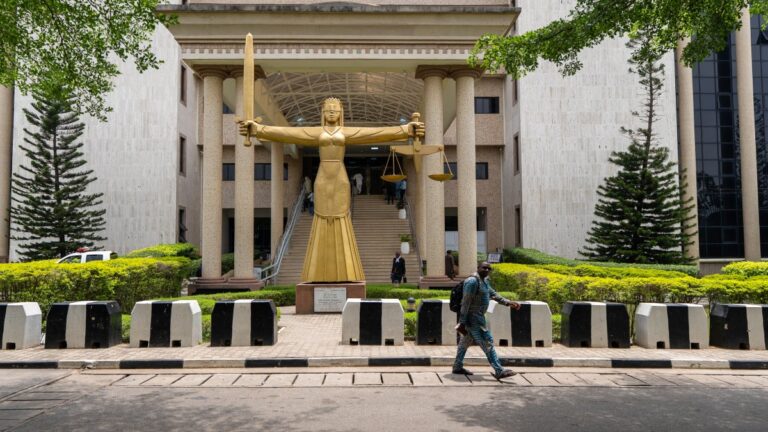
Legal practitioners in Nigeria are renewing calls for the Federal Government and state governments to appoint substantially more judges, warning that unfilled judicial vacancies, expanding court dockets and inadequate institutional support are undermining the constitutional promise of timely justice.
Senior lawyers, bar associations and civil-society advocates argue that the crisis is no longer confined to isolated courts or particular states. It extends from the Federal High Court, which handles commercially significant disputes, tax matters, admiralty claims, banking litigation and many public-law cases, to state High Courts burdened by criminal trials, land disputes, family matters, probate cases and contractual claims.
The result, practitioners say, is a judicial system in which judges are expected to manage hundreds of active matters at a time, deliver lengthy written rulings and judgments, supervise registries, hear urgent applications and cope with frequent adjournments caused by insufficient courtroom infrastructure. The consequences are felt not only by litigants but by businesses, investors, accused persons awaiting trial and families whose disputes remain unresolved for years.
“In the determination of his civil rights and obligations, including any question or determination by or against any government or authority, a person shall be entitled to a fair hearing within a reasonable time by a court or other tribunal …”
— Section 36(1), Constitution of the Federal Republic of Nigeria 1999 (as amended)
Context and Background
Nigeria’s judiciary operates within a federal constitutional structure in which judicial responsibilities are divided among federal and state courts. At the federal level, the Supreme Court, Court of Appeal, Federal High Court, National Industrial Court and other specialised tribunals perform different functions. At the state level, High Courts, Customary Courts of Appeal, Sharia Courts of Appeal and magistrates’ courts deal with the bulk of disputes that affect ordinary citizens.
But the growth of Nigeria’s population, urban economy and commercial activity has not been matched by an equivalent expansion in judicial personnel, courtrooms, registries or technological infrastructure. In major commercial centres such as Lagos, Abuja, Port Harcourt, Kano and Onitsha, litigation volumes have risen alongside disputes involving real estate, insolvency, corporate governance, employment, public procurement, financial services and electoral or administrative decisions.
The concern is particularly acute in relation to the Federal High Court. The court’s jurisdiction includes matters involving the revenue of the Federal Government, customs and excise, banking, intellectual property, companies, aviation, shipping and immigration. It is also frequently approached in politically sensitive litigation involving government agencies and regulatory decisions. Lawyers say vacancies on the court’s bench place disproportionate pressure on serving judges and delay cases with substantial economic implications.
Similar concerns have emerged within state judiciaries, where retirement, death, elevation to appellate courts and delayed appointment processes can leave divisions operating below capacity. In some jurisdictions, litigants wait months merely to obtain hearing dates, while fully contested civil matters can take several years before judgment. Criminal cases, including those involving defendants in custody, are particularly vulnerable when trial dates are repeatedly lost to congested calendars.
The issue has become a recurrent theme in discussions led by the Nigerian Bar Association (NBA), judicial reform groups and legal academics. The NBA, led by its president Mazi Afam Osigwe, SAN, has consistently emphasised that access to justice requires more than courthouses and constitutional guarantees; it requires enough trained and independent judicial officers to hear disputes efficiently.
At the federal level, the administration of the judiciary also involves the National Judicial Council (NJC), chaired by the Chief Justice of Nigeria, Justice Kudirat Kekere-Ekun. The NJC plays a central role in recommending candidates for judicial appointment and in preserving standards of judicial discipline and independence. The leadership of the Federal High Court, under its Chief Judge, Justice John Tsoho, has similarly faced the practical challenge of distributing cases across divisions with uneven workloads and limited personnel.
Why the Number of Judges Matters
The demand for appointments is rooted in a straightforward proposition: a justice system cannot deliver timely decisions when too few judges are expected to perform an ever-expanding range of functions. Each pending matter requires not merely a hearing date but case management, review of pleadings, consideration of applications, legal research, preparation for trial and the drafting of reasoned decisions.
For many judges, the pressure does not end when proceedings close. Nigerian judgments often require detailed consideration of statutory provisions, documentary evidence, witness testimony and precedents from the Supreme Court and Court of Appeal. In complex commercial or constitutional matters, the drafting process can be extensive. A judge with a crowded docket may therefore face a difficult balance between disposing of cases quickly and ensuring that judgments are sufficiently reasoned to survive appellate scrutiny.
Lawyers argue that this pressure contributes to adjournments, prolonged rulings on interlocutory applications and delays in the delivery of final judgments. Although the Constitution requires judgments to be delivered within prescribed periods after the conclusion of evidence and final addresses, the wider problem often begins much earlier: cases may take years to reach the stage at which a final judgment can be written.
The effect on litigants can be profound. A small business unable to recover a debt may lose working capital. A family contesting land ownership may be unable to develop or sell property. An employee challenging an unlawful dismissal may remain without compensation for years. A defendant in a criminal case may endure prolonged uncertainty, while victims and witnesses can lose confidence that the process will produce accountability.
Legal and Policy Analysis
The constitutional basis for strengthening the bench is clear. Under Section 6(1) of the Constitution of the Federal Republic of Nigeria 1999 (as amended), judicial powers are vested in the courts established for the Federation. That grant of power is meaningful only where courts possess the personnel and resources necessary to exercise it.
“The judicial powers of the Federation shall be vested in the courts to which this section relates, being courts established for the Federation.”
— Section 6(1), Constitution of the Federal Republic of Nigeria 1999 (as amended)
For the Federal High Court, Section 250 of the Constitution provides for a Chief Judge and such number of other judges as may be prescribed by an Act of the National Assembly. Appointments are made by the President on the recommendation of the National Judicial Council, subject to confirmation by the Senate. For state High Courts, Section 271 establishes a comparable framework: appointments are made by the governor on NJC recommendation, subject to confirmation by the relevant House of Assembly.
In practice, the process can be slow. Candidate screening, background checks, NJC deliberations, executive action and legislative confirmation all take time. The process is designed to protect judicial quality and legitimacy, but lawyers say avoidable administrative delay should not be allowed to create chronic vacancies. A vacancy that remains unfilled for months or years transfers the burden directly to remaining judges and court users.
The solution, however, is not simply to appoint judges rapidly or indiscriminately. The judiciary requires appointments based on professional competence, integrity, temperament, writing ability and demonstrated independence. The selection process must remain transparent enough to command public confidence and robust enough to resist patronage, political interference or sectional pressure.
Legal analysts therefore advocate a planned appointment system. Rather than waiting until a judge has retired or a court’s workload has become unmanageable, the NJC, heads of courts, executive authorities and legislatures should maintain forward-looking vacancy schedules. Retirement dates are generally known in advance. Succession planning, timely calls for applications and prompt confirmation hearings could reduce gaps without compromising due process.
Funding and Institutional Capacity
Appointments alone will not resolve the backlog. Lawyers are also calling for increased and reliably released funding for the judiciary. Courts need functioning registries, trained court clerks, digital recording equipment, secure document-management systems, legal libraries, courtroom security and modern facilities for lawyers, witnesses and litigants.
Of particular importance is the proposal that judges be provided with research assistants or judicial clerks. In many common-law jurisdictions, judicial assistants help judges analyse authorities, organise records, identify legal issues and review comparative jurisprudence. Such support does not replace judicial decision-making; the judge remains solely responsible for the outcome. But it can reduce the time spent on routine research and administrative preparation, allowing judges to focus on hearings, deliberation and judgment writing.
Nigeria’s complex legal environment makes that assistance especially valuable. Courts often navigate a mixture of constitutional law, statutes, common-law principles, customary law, regulatory instruments and increasingly technical evidence involving digital transactions, financial systems and corporate structures. Properly trained assistants could improve efficiency while also supporting consistency and quality in judicial reasoning.
Any clerkship programme would need safeguards. Research assistants should be selected through merit-based procedures, subject to confidentiality obligations and clear ethical rules. Their role must not compromise the independence of judges or expose sensitive case materials to misuse. But with those protections in place, the programme could be among the most practical reforms available to overloaded courts.
The Economic Cost of Delayed Justice
Judicial delay is often discussed as a legal problem, but it is also an economic one. Investors assess whether contracts can be enforced, whether regulatory disputes can be resolved and whether assets can be protected through credible institutions. Where litigation appears unpredictable or excessively slow, businesses may price that risk into transactions, demand more security or avoid investment altogether.
For Nigeria, which continues to seek domestic and foreign investment in infrastructure, technology, manufacturing and energy, the reliability of dispute resolution is central to economic confidence. An efficient judiciary does not guarantee a favourable outcome for every investor or citizen. It guarantees something more fundamental: that disputes can be heard fairly, independently and within a reasonable time.
The social cost is equally significant. Delayed criminal trials can weaken public trust in law enforcement and deepen prison congestion. Long-running family and inheritance disputes can intensify conflict within communities. Land cases, which are common in rapidly expanding urban areas, can discourage development and fuel insecurity where competing claims remain unresolved.
Impact and Future Outlook
The present calls from lawyers should be understood as a demand for a broader justice-sector strategy rather than a narrow request for more judicial offices. Filling vacancies in the Federal High Court and state courts is urgent, but it must be accompanied by adequate budgets, improved court administration, digital case tracking, stronger alternative dispute resolution mechanisms and the deployment of qualified research assistants.
The Federal Government, state governors, the National Assembly, state Houses of Assembly and the NJC each have responsibilities within this framework. Executives must act promptly on recommendations. Legislatures must avoid undue delay in confirmation processes. Judicial leaders must continue to press for resources while maintaining high appointment standards. The legal profession, for its part, must support reforms that discourage unnecessary adjournments and procedural tactics that prolong litigation.
Ultimately, the issue goes to the credibility of constitutional democracy. Courts are the institutions to which citizens turn when government agencies exceed their powers, when contracts fail, when property is threatened and when personal liberty is at stake. If the courts are too understaffed to respond in time, legal rights risk becoming theoretical rather than enforceable.
For Nigeria’s lawyers, the message is increasingly urgent: justice delayed is not merely justice denied to an individual litigant; it is a structural burden on the economy, public confidence and the rule of law itself.
About the Author