NBA AGC 2026 President’s Dinner: A Timeless Legacy and the Institutional Meaning of Nigeria’s Legal Gathering
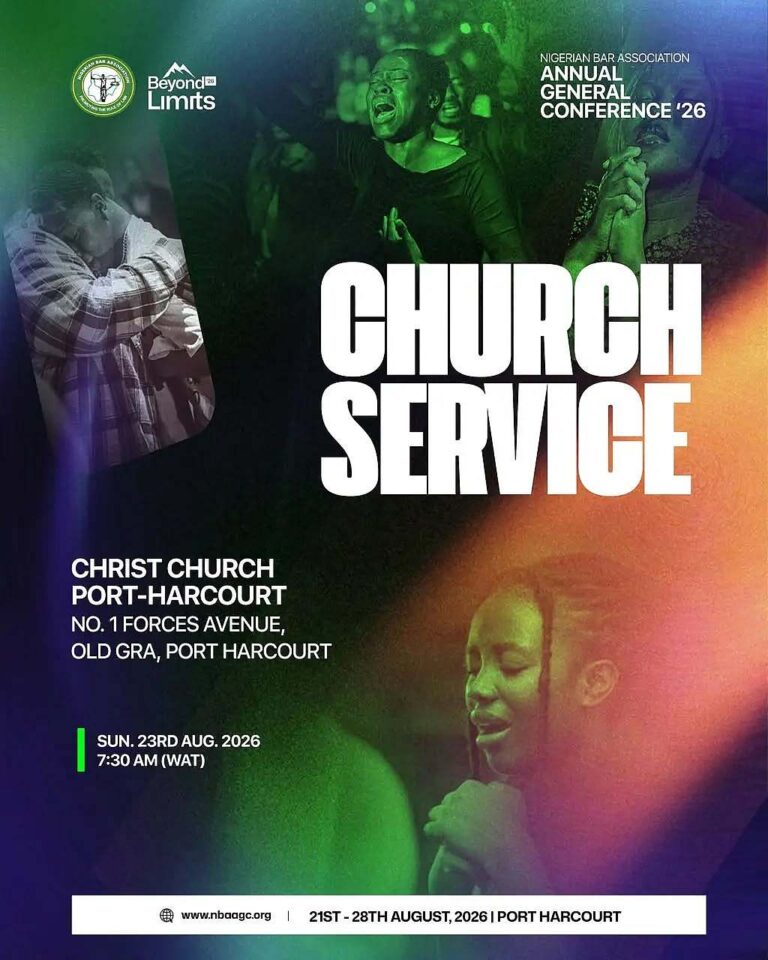
On Tuesday, August 25, 2026, the Nigerian Bar Association (NBA) convened its President’s Dinner at the Yakubu Gowon Stadium in Port Harcourt, Rivers State, as part of the 2026 Annual General Conference (AGC). Framed around the theme, “Celebrating a Timeless Legacy,” the event brought together members of the Bench, Senior Advocates of Nigeria, senior members of the Bar, government officials, corporate leaders and international guests.
Though the President’s Dinner is, on its surface, a ceremonial fixture of the annual conference calendar, its importance extends well beyond formal speeches, evening attire and professional networking. It is one of the rare occasions in Nigeria’s legal year in which the country’s principal legal institutions meet in a single setting: judges and advocates, public officers and private practitioners, domestic leaders and international observers. Such gatherings provide a revealing window into the health of the rule of law, the relationship between the judiciary and the legal profession, and the continuing struggle to translate constitutional ideals into public reality.
In Port Harcourt—a major petroleum-producing city whose history has been shaped by industrial wealth, environmental disputes, political contestation and litigation over resource control—the dinner’s theme carried particular resonance. A “timeless legacy” in the Nigerian legal context cannot be reduced to professional prestige. It must encompass the constitutional duty of lawyers and judges to safeguard liberty, due process, accountable government and equitable access to justice.
Context and Background
The Nigerian Bar Association is the country’s largest professional association of lawyers and remains one of its most influential civic institutions. Its annual conference has traditionally served as both a professional convention and a national policy forum. At its most consequential, the AGC brings legal practitioners into direct engagement with questions that define public life: judicial independence, electoral integrity, anti-corruption enforcement, human rights, business regulation, digital innovation, insecurity and the administration of criminal justice.
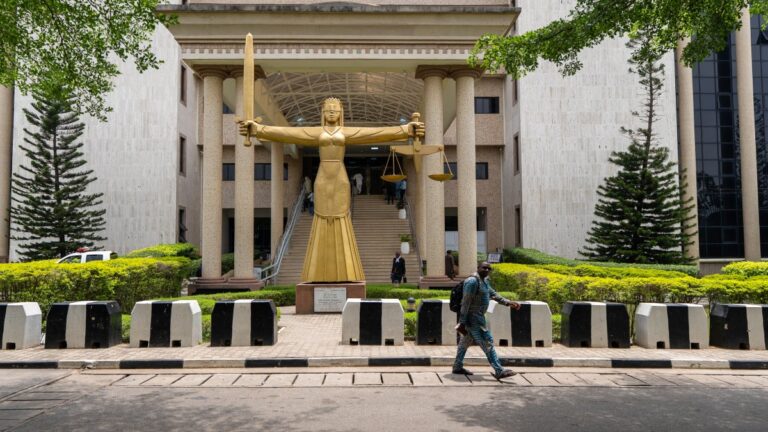
The NBA’s institutional relevance rests partly on the special constitutional position of lawyers within Nigeria’s legal order. The legal profession is not merely an industry serving commercial clients. It operates within a system in which courts are entrusted with the power to interpret the Constitution, adjudicate disputes between citizens and the state, and review the legality of official action.
The starting point is the Constitution of the Federal Republic of Nigeria 1999, as amended. Section 6 vests judicial powers in the courts, while Section 17 contemplates a social order founded on justice and equality. Section 36 protects the right to fair hearing, and Section 46 gives individuals a route to seek judicial enforcement of fundamental rights.
“In the determination of his civil rights and obligations, including any question or determination by or against any government or authority, a person shall be entitled to a fair hearing within a reasonable time by a court or other tribunal…” — Constitution of the Federal Republic of Nigeria 1999, section 36(1)
These provisions are regularly invoked in courtrooms across Nigeria. Yet their practical meaning depends on institutions: competent judges, prepared advocates, adequately funded courts, reliable registries, enforceable judgments and a culture in which public authorities accept legal restraint. The NBA’s President’s Dinner is therefore significant not simply because prominent legal figures attend it, but because it represents the shared professional space in which these institutional obligations are publicly recognised.
Port Harcourt as a Symbolic Venue
The choice of Port Harcourt is also meaningful. Rivers State sits at the centre of the Niger Delta’s economic and political history. Its communities have long confronted the legal consequences of oil extraction, including pollution claims, compensation disputes, land-use conflicts, corporate accountability litigation and arguments over federalism and revenue allocation.
For decades, Niger Delta litigation has tested the capacity of Nigerian law to balance economic development with environmental protection and community rights. The Petroleum Industry Act 2021, which introduced a new regulatory framework for the petroleum sector and established mechanisms including host community development arrangements, remains central to these debates. Its implementation continues to raise questions concerning transparency, benefit-sharing, environmental remediation and the accountability of both public agencies and private operators.
A national gathering of the legal profession in Port Harcourt inevitably takes place against that backdrop. The city represents Nigeria’s economic ambitions, but also the legal disputes generated when growth is not matched by credible environmental governance, responsive public institutions and meaningful remedies for affected communities.
A Dinner Beyond Ceremony
The President’s Dinner traditionally occupies a distinct place in the AGC programme. It is a formal occasion where the profession acknowledges service, welcomes guests and creates an environment for conversations that are often impossible in the more structured setting of plenary panels, technical sessions and courtrooms.
Among the expected participants were members of the Bench, Senior Advocates of Nigeria (SANs), leaders of NBA branches and sections, representatives of legal institutions, senior government officials and international guests. The presence of judicial officers and legal practitioners in one venue is especially notable in a profession where judicial independence requires both mutual respect and careful institutional distance.
The Senior Advocate of Nigeria rank, conferred through the Legal Practitioners’ Privileges Committee, is one of the profession’s highest distinctions. It recognises exceptional advocacy, academic contribution or service to the development of law. But the prestige attached to the rank also underscores a wider obligation: senior lawyers have disproportionate influence over legal culture, courtroom standards, mentoring and public confidence in justice.
Similarly, the presence of judges at professional events often carries public significance. Judicial officers must remain insulated from improper influence and partisan political activity. Yet a judiciary cannot operate in isolation from the legal profession it regulates and relies upon. The challenge is to preserve the constitutional independence of courts while maintaining channels for institutional dialogue on matters such as case delays, legal aid, procedural reform, professional ethics and court technology.
The Meaning of “Celebrating a Timeless Legacy”
The theme invited reflection on the legal profession’s inheritance. Nigeria’s legal tradition has been shaped by pre-colonial systems of dispute resolution, English common law, statutory law, customary law, Islamic law in applicable jurisdictions, constitutional litigation and the jurisprudence of Nigerian appellate courts. Its legacy includes distinguished advocates, courageous judges, reform-minded academics and civic actors who have used the law to resist authoritarianism and defend civil liberties.
But legacy is not synonymous with nostalgia. The profession’s history includes periods in which courts and lawyers faced intense pressure from military governments, executive overreach, corruption allegations and public distrust. The enduring question for the NBA is whether its modern leadership can preserve the best of that inheritance while confronting contemporary failures: delayed trials, overcrowded correctional facilities, weak enforcement of judgments, unequal access to legal representation and the growing complexity of technology-driven commerce and crime.
A timeless legacy, properly understood, is a continuing duty. It requires the legal profession to ensure that law remains a practical instrument of justice rather than a language accessible only to the wealthy, politically connected or institutionally powerful.
Legal and Policy Analysis
Judicial Independence and Public Confidence
One of the most important policy issues underlying the 2026 AGC is judicial independence. Nigeria’s constitutional structure recognises the separation of powers, but the day-to-day independence of courts can be affected by funding arrangements, executive control over judicial administration, security concerns, delayed appointments and the conditions of judicial service.
The Supreme Court’s decision in Attorney-General of the Federation v Attorney-General of Abia State & 35 Ors (2024), addressing local-government financial autonomy, renewed attention to the constitutional consequences of executive control over institutions designed to function independently. Although that decision concerned local governance, its wider lesson is relevant to the judiciary: constitutional autonomy must be real in practice, not merely asserted in formal provisions.
For the Bench, the Bar and policymakers, this means confronting the material conditions of justice. Courts require functional infrastructure, secure digital systems, trained personnel and transparent budgetary processes. Without them, the constitutional promise of a hearing “within a reasonable time” becomes increasingly difficult to honour.
Access to Justice and Criminal Procedure
The Administration of Criminal Justice Act 2015 was enacted to promote efficient criminal trials, protect defendants’ rights and reduce delays. Its objectives remain compelling more than a decade later. However, implementation varies widely among jurisdictions, and many defendants—particularly poor or unrepresented persons—still face prolonged pretrial detention and procedural uncertainty.
The legal profession has a crucial role in closing the gap between legislative reform and lived experience. Lawyers can provide pro bono assistance, challenge unlawful detention, support legal-aid initiatives and insist on compliance with procedural safeguards. The NBA, through its branches and public-interest structures, can also use its institutional voice to press for stronger funding for the Legal Aid Council of Nigeria, more effective police oversight and improved coordination among courts, prosecutors and correctional authorities.
These are not abstract concerns. Delayed justice harms victims, defendants, families, businesses and public trust. It also imposes economic costs: commercial disputes remain unresolved, investment decisions are deferred, and citizens increasingly look outside formal institutions for remedies.
Technology, Data and the Changing Profession
The 2026 gathering also occurred at a moment when artificial intelligence, electronic filing, digital evidence and data protection are reshaping legal practice. Nigeria’s Data Protection Act 2023 provides an important legal foundation for privacy regulation, but lawyers, judges and regulators must still address difficult questions about automated decision-making, cybercrime investigations, evidentiary reliability and professional confidentiality.
The use of artificial intelligence in legal research and document preparation may improve efficiency, particularly for smaller firms and legal-aid providers. It also creates risks. Unverified AI-generated legal authorities, disclosure of client data to third-party platforms and algorithmic bias could undermine professional obligations. The Rules of Professional Conduct for Legal Practitioners require lawyers to act competently, diligently and with fidelity to client confidentiality—duties that remain unchanged even when the tools of practice evolve.
Impact and Future Outlook
The immediate impact of a President’s Dinner cannot be measured solely through announcements or photographs. Its value lies in whether private conversations become public reforms: whether judges and lawyers identify practical barriers to case management; whether senior advocates invest in mentoring younger practitioners; whether international guests develop meaningful partnerships with Nigerian institutions; and whether the NBA turns conference commitments into sustained advocacy.
For Port Harcourt and Rivers State, hosting a major NBA event also carries economic significance. Large legal conferences support hotels, transport operators, caterers, event workers and small businesses. More importantly, they place the city at the centre of national conversations about investment, environmental accountability and the future of the Niger Delta.
Yet the most enduring measure of success will be institutional. The NBA’s leadership and membership face a continuing test: can the profession speak consistently for the rule of law even when doing so is inconvenient to governments, powerful clients or influential members of the Bar?
The 2026 President’s Dinner, under the banner “Celebrating a Timeless Legacy,” provided a moment of reflection for Nigeria’s legal establishment. The legacy worth celebrating is not simply one of rank, ceremony or professional distinction. It is the legacy of law as a restraint on arbitrary power, a defence for the vulnerable and a framework through which a diverse and economically complex nation can pursue justice.
That legacy will remain timeless only if Nigeria’s legal institutions continue to renew it—through independent courts, ethical advocacy, accessible justice and a sustained commitment to the constitutional promise that no citizen should stand outside the protection of the law.
About the Author