4. LAW: NBA AGC 2026 Local Organising Committee (LOC)
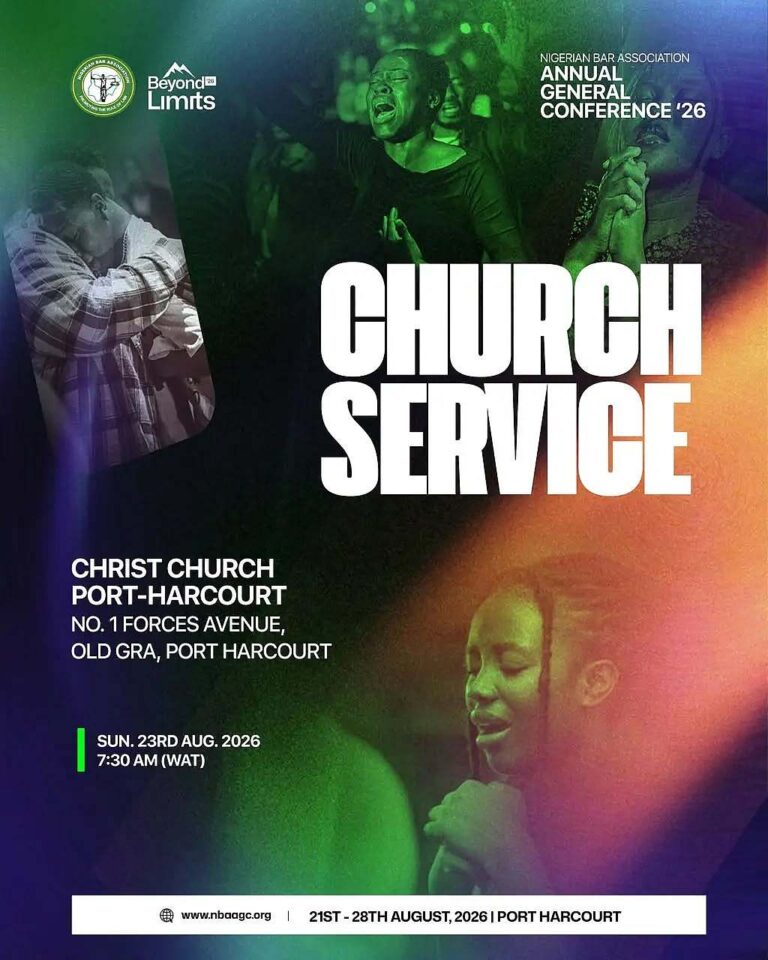
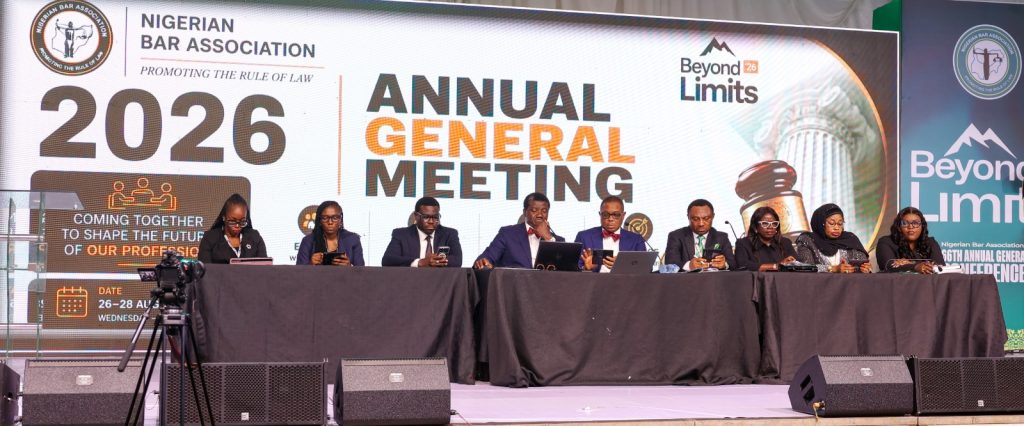
The inauguration of the Local Organising Committee (LOC) for the Nigerian Bar Association Annual General Conference 2026 marks the beginning of an important institutional undertaking for Nigeria’s legal profession. Scheduled to be hosted in Port Harcourt, Rivers State, the conference will bring together lawyers, judges, academics, policymakers, corporate advisers, regulators, law students and international delegates under the theme: “Beyond Limits: Redefining the Practice of Law.”
At the helm of the committee is Abdul Mohammed, SAN, who will serve as Chairman, with Sammie Sommiari, SAN as Alternate Chairman and Barbara Omosun, Esq. as Secretary. Their appointment places responsibility for the practical delivery of what is often described as the “Greatest Legal Gathering in Africa” in the hands of senior practitioners and organisers expected to navigate the significant legal, operational and public-interest demands of a national conference.
The task before the LOC extends far beyond ceremony. It concerns security planning, access to conference venues, delegate welfare, transport coordination, accommodation, emergency response, digital infrastructure, professional programming support and the management of a gathering that can draw thousands of members of the Bar from across Nigeria and beyond. In Port Harcourt, a city central to Nigeria’s petroleum economy and to the politics of the Niger Delta, the 2026 conference will also carry wider economic and symbolic significance.
Context and Background
The Nigerian Bar Association (NBA) occupies a unique place in Nigerian public life. It is not merely a professional association of lawyers; it is a major civic institution whose annual conference has, over time, become a forum for debate on constitutionalism, judicial independence, economic reform, human rights, professional ethics and the administration of justice.
Annual General Conferences are traditionally occasions at which the profession takes stock of itself. They provide a platform for lawyers to address questions that affect not only legal practice but also the broader direction of the Nigerian state: the rule of law, electoral integrity, police accountability, access to justice, regulation of emerging technologies, commercial dispute resolution and the relationship between government power and individual liberty.
The decision to hold the 2026 conference in Port Harcourt places those national debates in a city whose history is deeply connected to the legal and economic development of the Niger Delta. Port Harcourt has long been an important centre of commerce, litigation, maritime activity and energy-sector transactions. As the administrative capital of Rivers State and a major gateway to oil and gas operations, it hosts a substantial legal community engaged in corporate law, environmental litigation, arbitration, real estate, tax matters, labour disputes, public law and the complex regulatory architecture surrounding extractive industries.
The city’s legal importance is reinforced by the presence of the Federal High Court, the Rivers State High Court, magistrates’ courts, customary courts, arbitration practitioners, corporate law firms and lawyers serving the oil and gas industry. It is also situated within a region where questions of environmental degradation, community rights, pipeline security, revenue allocation and corporate accountability have repeatedly reached Nigerian and international courts.
For that reason, the conference theme—“Beyond Limits: Redefining the Practice of Law”—has particular resonance. It invites reflection on whether Nigerian lawyers are adequately equipped for a rapidly changing legal environment shaped by artificial intelligence, digital evidence, cross-border commerce, climate litigation, alternative dispute resolution, data governance and increasingly sophisticated regulatory systems.
The Leadership of the 2026 LOC
The composition of the LOC reflects the need for both professional authority and local institutional knowledge. Abdul Mohammed, SAN, as Chairman, will be expected to provide strategic leadership, coordinate decision-making and ensure that the committee’s work is aligned with the standards and expectations of the national NBA leadership.
The designation Senior Advocate of Nigeria (SAN) is among the highest professional distinctions available to a legal practitioner in Nigeria. It conveys not only professional standing but also heightened public expectations regarding leadership, ethics and service to the legal system. The participation of senior advocates in the LOC therefore signals the importance attached to the conference’s organisation and public profile.
As Alternate Chairman, Sammie Sommiari, SAN is positioned to support continuity, share the burden of oversight and help coordinate the committee’s engagement with local stakeholders. In a conference of this scale, leadership cannot be confined to formal titles. It requires sustained engagement with government agencies, venue operators, security institutions, hotels, transport providers, medical services, sponsors and the NBA’s national secretariat.
Barbara Omosun, Esq., as Secretary, will occupy a role critical to governance, documentation and institutional accountability. The secretary of such a committee is ordinarily responsible for recording resolutions, maintaining correspondence, coordinating meetings, tracking assignments and helping to ensure that decisions made by the LOC are executed through clear administrative processes.
The effectiveness of the committee will ultimately depend on whether its internal procedures are transparent, responsive and capable of managing the complexity that accompanies a large national event. A well-run LOC must anticipate problems before they become crises: delayed registrations, hotel shortages, transport bottlenecks, accreditation failures, medical emergencies, inaccessible venues and the heightened security concerns associated with large public gatherings.
Operational Responsibilities: More Than Event Planning
The formal mandate of the LOC includes logistics, security, venue management and delegate experience. Each of these responsibilities has legal, financial and reputational implications.
Security and Public Safety
Security planning will likely be among the most closely scrutinised parts of the committee’s work. Conferences involving thousands of participants require coordinated planning with relevant public authorities, private security providers, emergency medical services and venue managers. This is especially important in a country where security risks can vary sharply by location and where public confidence depends on visible preparedness rather than assurances alone.
The constitutional foundation for the state’s role in public safety is clear. Section 14(2)(b) of the Constitution of the Federal Republic of Nigeria 1999 (as amended) provides:
“The security and welfare of the people shall be the primary purpose of government.”
Although this provision appears in the Constitution’s Fundamental Objectives and Directive Principles of State Policy, its language remains a central statement of the public responsibilities that should guide cooperation between conference organisers and state institutions. The LOC will need to work within lawful security arrangements that protect delegates without creating unnecessary restrictions on movement, expression or peaceful assembly.
Venue Management and Accessibility
Venue management is also a matter of inclusion. The NBA conference is intended to serve a diverse legal profession that includes senior advocates, young lawyers, lawyers with disabilities, law students, in-house counsel, academics and delegates travelling from every geopolitical zone. A successful event must therefore consider physical accessibility, reliable power supply, sanitation, emergency exits, multilingual or clear signage, digital connectivity and facilities capable of supporting simultaneous sessions.
The question of accessibility should not be treated as an afterthought. It is consistent with the broader equality principles embedded in the Constitution and with Nigeria’s evolving disability-rights framework, including the Discrimination Against Persons with Disabilities (Prohibition) Act 2018. For a profession that frequently argues for equal treatment before the law, the practical design of its own major gathering is an important test of institutional credibility.
Delegate Experience and Professional Value
“Delegate experience” may sound like the language of event management, but it has substantive professional consequences. Participants must be able to register efficiently, obtain accurate information, attend sessions safely, access materials, network with colleagues and receive value for the financial and professional commitment required to attend.
For younger lawyers in particular, an annual conference can offer rare access to mentorship, employment opportunities, continuing legal education and exposure to practice areas that may not be available within their immediate jurisdictions. The LOC’s approach to affordability, transportation and access to information may therefore determine whether the conference is genuinely national in character or effectively limited to those with the resources to navigate its costs.
Legal and Policy Analysis
The 2026 conference comes at a moment when the practice of law in Nigeria is being reshaped by forces that challenge traditional models of advocacy and legal service. The theme “Beyond Limits: Redefining the Practice of Law” is broad enough to encompass the central policy questions confronting the profession.
One such question is the effect of technology on legal work. Digital filing systems, virtual hearings, electronic discovery, automated document review and generative artificial intelligence are altering how lawyers research, draft, advise clients and prepare cases. These developments offer efficiency but also create risks involving confidentiality, professional negligence, bias, authorship and the reliability of AI-generated legal analysis.
The Rules of Professional Conduct for Legal Practitioners 2007 impose duties of competence, confidentiality and integrity upon lawyers. Those obligations do not disappear because advice is prepared with technological assistance. If anything, the use of emerging tools may require lawyers to exercise greater care in safeguarding client information and verifying legal authorities before relying on them in court or in commercial transactions.
The conference also offers an opportunity to address access to justice. Nigeria’s justice system continues to face serious concerns relating to delay, cost, congestion in courts and uneven access to legal representation. Lawyers can debate how mediation, arbitration, small-claims procedures, legal aid initiatives and court digitalisation might reduce barriers without compromising due process.
Port Harcourt’s location further sharpens discussion about environmental and energy law. The Niger Delta remains central to national debates over oil spills, gas flaring, remediation, host-community relations and corporate responsibility. The legal profession has a vital role in determining how statutes, regulatory decisions and court judgments balance economic development with environmental protection and the rights of affected communities.
In this sense, the conference’s relevance will depend not only on the quality of keynote addresses but on whether its deliberations produce practical proposals: stronger ethical guidance for technology use, improved legal-aid partnerships, better continuing professional development, more efficient dispute-resolution systems and a clearer role for lawyers in climate and environmental governance.
Economic Significance for Port Harcourt and Rivers State
Large professional conferences generate immediate economic activity. Hotels, restaurants, transport operators, event vendors, printers, technology providers, caterers, security personnel and small businesses can all benefit from the arrival of delegates. For Port Harcourt, hosting the NBA AGC 2026 may offer a significant opportunity to showcase the city’s hospitality infrastructure and commercial capacity.
But the economic impact should be measured carefully. The most meaningful legacy would extend beyond short-term hotel occupancy and consumer spending. If properly managed, the event could strengthen Port Harcourt’s reputation as a destination for arbitration, corporate retreats, academic conferences and professional services. It could also encourage conversations about investment, infrastructure, urban mobility and the capacity of Rivers State to host major national and international gatherings.
There is, however, a public-interest dimension. Major events should not impose avoidable burdens on local residents through traffic disruption, inflated accommodation costs or excessive public expenditure without transparency. The LOC and relevant authorities will be judged not simply by the scale of the event but by the fairness and competence of its administration.
Impact and Future Outlook
The inauguration of the NBA AGC 2026 Local Organising Committee is therefore more than an administrative milestone. It is an early test of how the Nigerian legal profession intends to present itself at a time of institutional uncertainty and technological change.
Under the leadership of Abdul Mohammed, SAN, supported by Sammie Sommiari, SAN and Barbara Omosun, Esq., the committee has an opportunity to set high standards for organisation, inclusion, security and professional engagement. Its success will be measured by whether delegates experience a safe, accessible and intellectually serious conference—and whether the event reflects the rule-of-law values that lawyers are expected to defend.
For Port Harcourt, the conference represents a chance to assert its place not only as an energy capital but as a legal, commercial and intellectual hub of the Niger Delta. For the NBA, it presents an opportunity to move “beyond limits” in a more concrete sense: by confronting the practical constraints facing lawyers, courts and citizens, and by defining a legal profession capable of serving a changing Nigeria.
About the Author